
During the pandemic, Tesla was hovering around $95 per share.
By the end of 2021 it had reached a high of $1,227.
The emission free car maker performed so well during 2021 it even smoked Bitcoin.
Since then, it’s been on the slide and is now trading around $548*
Consequently, Elon Musk’s net worth has dropped more than $100 billion this year. Yet, he’s still the richest person on earth (US$195 billion)
Elon Musk is a genius, but equally divisive.
Musk recently purchased Twitter for a lazy $44 billion and immediately tweeted his staff an ultimatum, “either work long hours at high intensity or quit”.
His staff tweeted “good-bye” and there was a mass exodus of thousands.
A week later he was on both knees trying to tweet them back.
There’s an old maxim about people you idolise…the worst thing you can ever do is meet them because you’ll find out how flawed they are.
And no one epitomizes this more than Musk.
On the one hand he’s an environmental evangelist.
For the rusted-on believers, he’s given their ESG compass, (environmental, social, governmental) a true north direction.
But on the other hand, he’s also anti-establishment.
He pays his staff below the award wage and is constantly fighting the unions.
In a recent survey by Morningstar, 87% of respondents said they’re seeking more ethically focused investments. Specifically, this means – environmental, social and governance focused investments (ESG).
But what is ethical investing?
And how do you determine if one person’s ethics are more virtuous or right than someone else’s?
For example…
Is it right of Elon Musk to champion the environment ahead of employee’s wages and corporate governance?
And is it right for him to reinstate Twitter accounts such as Donald Trump amid accusations of sedition and hatred?
I like the idea of ESG, but it sits in the middle of a very hazardous intersection.
Trump’s Twitter account is a good example.
Most of the people who champion free speech often demand their critics or those they don’t like, be silenced.
I don’t like a lot of what Trump stands for either (which is mostly himself) but we can’t have it both ways. Free speech and silence, when it suits.
Virtue signaling looks good on paper, but the downside is it creates a lot of finger pointing and self-righteousness, depending on our own values.
And that’s where ESG has a problem, in my opinion. It’s just an acronym which creates enormous division.
Meaning, while one person might agree with ESG, someone like me might prefer SGE.
In my world, I think social justice and a sense of fairness is more important than the environment.
It doesn’t mean I don’t care about the environment. I do. In fact, nothing could make me happier or more proud than to draw my last breath in a paddock full of rye grass and clover!
It’s just that I have different priorities, based on my own values.
And you’re the same.
You may believe in ESG, SGE, GES, SEG, whatever.
Ethics are a matter of perception which means they’ll always be filtered and determined by our own hierarchy of values.
Hence the reason so many people have fallen out with Elon Musk recently. They’re not sure what he stands for anymore.
They thought because he championed the environment, he was ‘one of us’ and not ‘one of them’.
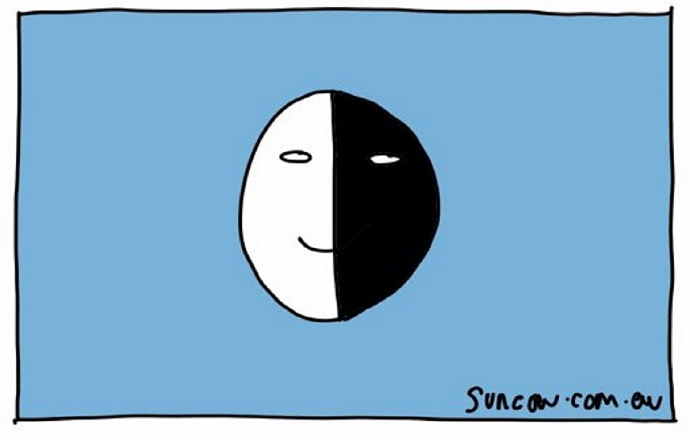
Elon Musk is everything. Mad. Malevolant. Maverick. Messiah.
And how you see him will be determined by what you value most…which could be the car you drive.
Have a great weekend!
Adam
*Denotes pre-stock split prices for Tesla. Current share price post stock split is circa, US$180
Still Going In — But Not Forever At some point, usually somewhere between 55 and 65, a thought surfaces that you can’t quite ignore. You’re not ready to stop completely. But you’re not sure you want to keep going at full pace either. The commute that felt fine at 45 feels heavier at 58. The …
Continue reading “Transition to Retirement: An Inner West Guide”
This question comes up constantly with clients in their 50s, and understandably so. The kids are largely through school. The income is better than it’s ever been. And for the first time in years, there’s actually surplus cash at the end of the month. The question is where to put it. The mortgage-vs-super debate gets …
Continue reading “Should You Pay Off Your Mortgage or Boost Your Super?”
The decade before retirement is the most financially consequential of your life. The decisions you make between 55 and 65 — or 50 and 60, depending on when you plan to stop working — have an outsized impact on what the next 30 years look like. Get them right and you arrive at retirement with …
Information provided by Suncow Wealth is general in nature and does not take into consideration your personal financial situation. It is for educational purposes only and does not constitute formal financial advice. Remember, the value of any investment can go down as well as up. Before acting, you should consider seeking independent personal financial advice that is tailored to your needs. Suncow Wealth Pty Ltd is a Corporate Representative No.441116 of AFSL 342766.